For organizations
Community insight you can act on.
Photovoice360 gives your organization one workflow for the whole project: setting the question, collecting participant photographs and stories, facilitating reflection and dialogue, organizing what you learn, and producing the reports, briefs, and exhibits you need at the end.
Guided setup asks what you want to learn first. Our team can support planning and facilitation alongside the platform.
Where organizations use this
Understanding
Participation
Change
Who this is for
Universities and researchers
Participatory research that centers community knowledge, from the guiding question and participant-created photographs through facilitated dialogue, participatory analysis, validated findings, and action.
Documented method, traceable participant material, and analysis-ready exports.
Nonprofits and foundations
Community needs and assets assessment, program evaluation, and reporting to funders.
Findings reports and funder summaries drawn from your own project evidence.
Public health and healthcare
Understand what patients and residents experience through participant-created photographs and first-person interpretation, within the project’s consent, privacy, photography, and institutional-review requirements.
Stakeholder briefs and community priorities named by the people affected.
Schools and community organizations
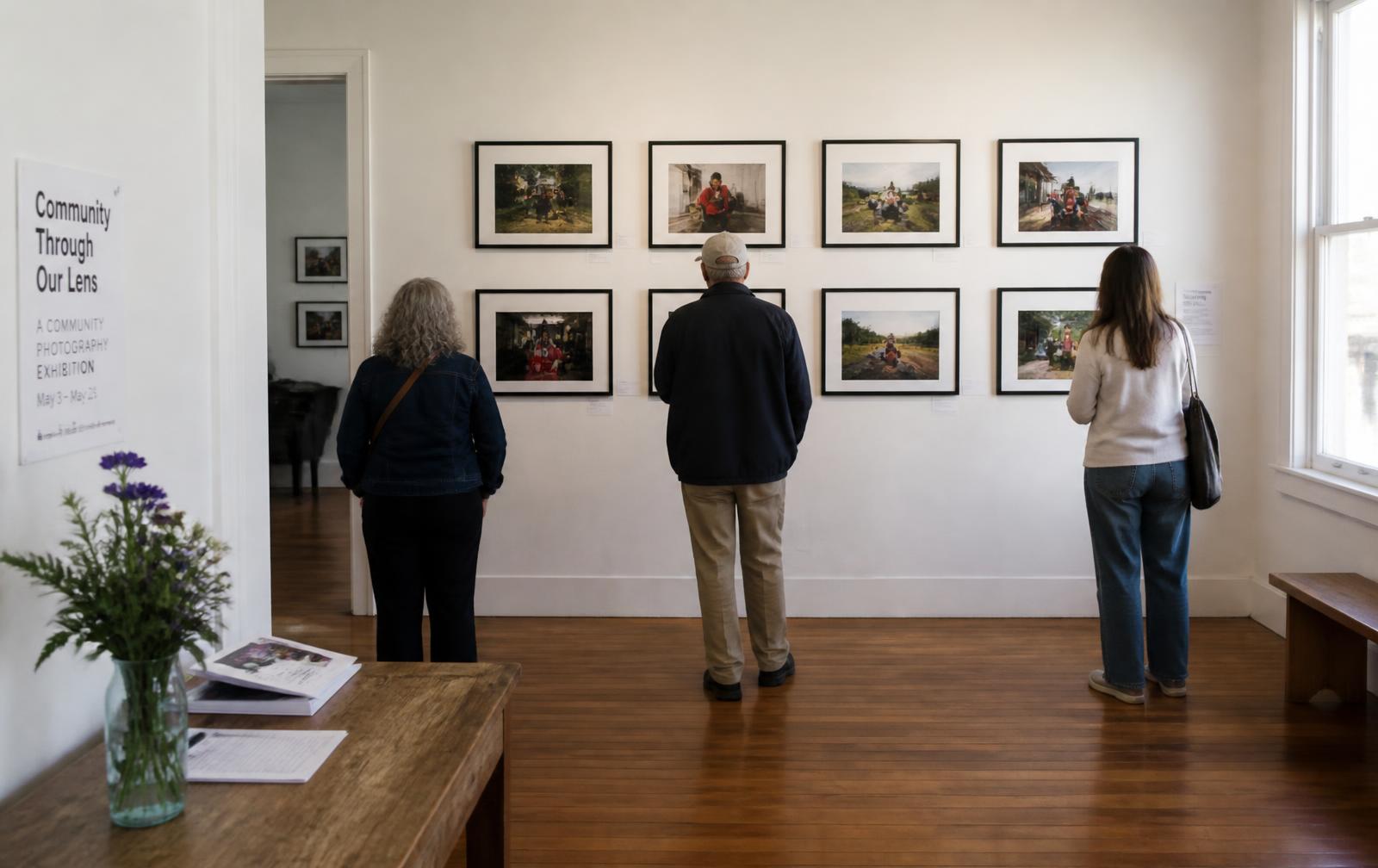
Youth and community engagement projects that end in something public and useful.
Exhibit and presentation material, plus a recorded plan for community action.
What a project includes
- What your organization sets up
- The question you want answered, one or more projects, and the facilitators who will run them — whether that is a single project or several at once.
- What participants experience
- Participants join with a project link or code, respond with their own photographs, and explain what those photographs mean to them, in their own words.
- Permissions, before anyone contributes
- Participants are told how their photographs and narratives are intended to be used before they take part, and agree to those uses as the terms of participating. How their name appears is a separate choice they make themselves.
- Facilitator review before dissemination
- Participants review and sign the project’s disclosed uses before contributing. The facilitator then determines which completed submissions are approved for the project record, participant-only display, public gallery, report, exhibit, or other stated project output.
- Participatory analysis
- Possible patterns may be organized for review, but they do not become community findings automatically. Participants and facilitators examine the evidence, develop and challenge themes, preserve meaningful differences, and validate what the project will report.
- What the project can produce
- Depending on the project scope and selected services, the connected record can support a findings report, executive summary, stakeholder brief, community needs assessment, funder report, exhibit, presentation, publication, or community action plan. Photovoice360 does not invent statistics, quotations, needs, outcomes, partners, or findings.
- Evaluation, planned from the start
- Record what you hope will change at setup, and keep participant experience and outcome measures separate from Photovoice evidence.
- Guidance while you work
- Built-in guidance suggests next steps, prompts, and drafts. It never writes participant meaning, and no suggestion becomes a finding without human review.
- Complete project package
- Close or archive the project, then download one organized ZIP containing the workbook, original photographs, narratives and reflections, analysis, findings, evaluation, project settings, consent and use metadata, and a manifest—subject to privacy and export permissions.
What you can produce
- Project findings report
- Executive summary
- Stakeholder brief
- Community needs assessment
- Funder report
- Exhibit and presentation material
- Grant narrative drafting support
Drafts are built from your project's own documented evidence. Statistics, quotes, needs, and outcomes are never invented, and a documented finding is always distinguished from an interpretation or a recommendation.
Built for sensitive community stories.
Photographs are held in private storage, and project material is private by default. Ethics board or IRB review, where a project requires it, remains the responsibility of your institution.